
Robert Browning's 'My Last Duchess' Questions and Answers (Marks 2 & Marks 6) | XI WBCHSE 2nd Semester

If you're a WBCHSE Class 11 student preparing for My Last Duchess by Robert Browning in Semester II, then this post it for you. This post compiled correct, easy-to-remember questions and answers for Marks 2 and Marks 6.
These concise yet insightful answers will help you excel in exams while deepening your understanding of the poem. Additionally, there are some extra questions and answers to ensure thorough preparation. Yeah!!
'MY LAST DUCHESS' Complete Bengali meaning Line-by-line : HERE detailed and easy way explained for the students.
'My Last Duchess' Short Questions & Answers for Marks 2 or 3
What type of a man is the Duke in Browning’s poem, ‘My Last Duchess’?
Ans. The Duke in Robert Browning's 'My Last Duchess' is a proud, arrogant, and controlling man. He is obsessed with his power, status, and the idea of ownership, treating his late wife as a mere possession rather than a person. The Duke’s jealousy and insecurity are shown in his displeasure with the Duchess's friendliness and his hinting at having had her silenced.
Ans. The Duke in Robert Browning's 'My Last Duchess' is a proud, arrogant, and controlling man. He is obsessed with his power, status, and the idea of ownership, treating his late wife as a mere possession rather than a person. The Duke’s jealousy and insecurity are shown in his displeasure with the Duchess's friendliness and his hinting at having had her silenced.
What was the gift the Duke had gifted to the Duchess?
Ans. In the poem, the valuable gift the Duke gave her was his prestigious family name, which had been passed down for nine hundred years. He was upset that she ranked his gift equally with those of others.
Ans. In the poem, the valuable gift the Duke gave her was his prestigious family name, which had been passed down for nine hundred years. He was upset that she ranked his gift equally with those of others.
Bring out the imagery implied when the Duke says that the Duchess misses the ‘mark’.
Ans. In the poem, when the Duke describes the Duchess as missing or exceeding the "mark," he uses an archery metaphor, implying that she is like one of his soldiers competing for prizes, rather than a Duchess who is inherently a prize herself.
Ans. In the poem, when the Duke describes the Duchess as missing or exceeding the "mark," he uses an archery metaphor, implying that she is like one of his soldiers competing for prizes, rather than a Duchess who is inherently a prize herself.
What does Neptune taming a sea horse symbolize?
or,
What characteristic trait of the Duke's character can be discerned when he refers to the bronze statue if Neptune? (book question)
Ans. In the end of poem, the Duke asks the silent interlocutor to take a look at the bronze statue of Neptune, the Sea-God, depicting him as taming a sea- horse. The sculpture is ironic and Neptune in a way symbolizes the Duke who has an habit of taming wives.
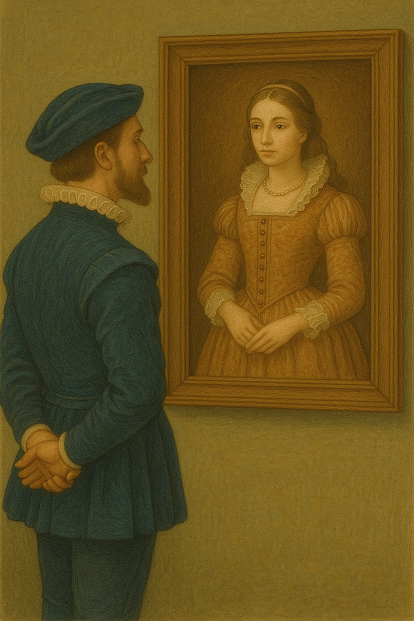
Whose picture is there on the wall?
Ans. In the end of poem, the Duke asks the silent interlocutor to take a look at the bronze statue of Neptune, the Sea-God, depicting him as taming a sea- horse. The sculpture is ironic and Neptune in a way symbolizes the Duke who has an habit of taming wives.
Whose picture is there on the wall?
How does she look in the picture? or, What does the speaker mean to say by the expression ‘as if alive’?
Ans. In the poem ‘My Last Duchess’ by Robert Browning, the painting of the Duke’s last Duchess is on the wall.
☐ In the picture, the Duchess looks life-like.
“That’s my last Duchess painted on the wall”-Who says this and to whom?
Ans. In Robert Browning’s poem ‘My Last Duchess’, the Duke of Ferrara says this to the envoy of a Count who has come with a marriage proposal.
“That’s my last Duchess painted on the wall”-What does the speaker mean by the expression ‘last Duchess’? What does the pronoun ‘my’ suggest?
Ans. The expression ‘last Duchess’ refers to the Duke’s wife who is now dead.
☐ The pronoun ‘my’ suggests the Duke's possessiveness and that he considered his wife his property.
“I call/ That piece a wonder now”-What is ‘that piece’? Who calls the piece a wonder?
Ans. In the poem ‘My Last Duchess’, ‘that piece’ refers to the painting of the Duke’s last Duchess.
☐ The Duke of Ferrara calls the painting a wonder.
“Fra Pandolf’s hands/ Worked busily a day”-Who is Fra Pandolf? What did his hands do busily a day?
Ans. In Robert Browning’s poem ‘My Last Duchess’, Fra Pandolf is an imaginary painter who painted the last Duchess of the Duke.
☐ The hands of the artist, Fra Pandolf, worked busily a day painting the portrait of the Duke’s last Duchess.
“There she stands.”-Who stands and where?
Ans. In Robert Browning’s poem ‘My Last Duchess’, the last Duchess of the Duke stands in the painting on the wall.
“Will’t please you sit and look at her?”-Who is the speaker? What does the speaker request the listener?
Ans. In Robert Browning’s poem ‘My Last Duchess’, the Duke of Ferrara is the speaker.
☐ The speaker, the Duke of Ferrara, requests the listener, the messenger of a Count, to sit and look at the painting of his last Duchess.
”Fra Pandolf” by design, for never read/ Strangers like you that pictured countenance”-What does the above extract mean?
Ans. Here, it means that Fra Pandolf, a renowned artist, intentionally portrayed the Duchess's expression so artistically that only a connoisseur, and not an ignorant person like the envoy, could fully understand the subtle emotions in the painting.
"But to myself they turned (since none puts by
The curtain I have drawn for you, but I)
And seemed as they would ask me,"
- Why did the strangers turn to the Duke?
Ans. As the strangers, much like the envoy, were not connoisseurs of art, they failed to decode the pictured countenance and the depth and passion of the Duchess’ intense glance. So they would turn to the Duke to understand the artistic beauty of his Duchess’ glance and also how it came about.
What is the ‘spot of joy’?
Ans. In the poem ‘My Last Duchess’ by Robert Browning, the expression ‘spot of joy’ refers to the flush of pleasure or blush on the cheeks of the Duchess.
What could arouse the ‘spot of joy’?
Ans. The Duke complains that this ‘spot of joy’ was aroused not only by her husband’s presence but also by the flattery of others, like Fra Pandolf, who might have told her that her cloak covered her wrist too much or that paint could not capture the faint half-flush that fades along her throat.
With whom is the expression ‘spot of joy associated? What was cause enough for calling up that ‘spot of joy’?
Ans. The expression ‘spot of joy’ is associated with the last Duchess of the Duke in Robert Browning’s poem, ‘My Last Duchess’.
☐ According to the Duke, Any compliment from anyone was enough to call up the spot of joy or make the Duchess blush.
How, according to the Duke, Fra Pandolf flattered the last Duchess?
Ans. According to the Duke, Fra Pandolf perhaps flattered the Duchess by saying that her cloak drapes over her wrist too much or that it would be impossible to create the faint half-flush on her face in painting.
“She had/A heart how shall I say too soon made glad”-Whose ‘heart’ is referred to here? How could that person’s heart be made glad easily?
Ans. The ‘heart’ referred to here belongs to that of the Duke’s last Duchess.
☐ Her heart could be made too soon glad just by anything or any person.
“Too easily impressed”-About whom is this said? Why was the person too easily impressed?
Ans. This is said about the last Duchess of the Duke.
☐ The Duchess was too easily impressed because she was so good-natured that she liked whatever she looked at.
What type of a lady was the Duchess?
Answer: The Duchess was a frank, good-natured and lovable woman. She liked everything she saw and was readily pleased. She smiles and blushes for everyone. She would equate the Duke’s gift with any other gift. The ‘spot of joy’ on her cheek embodies the essence of her character. As in life, so as a work of art, she draws everyone's admiration.
How did the Duchess look upon the Duke’s favour as compared with other gifts?
Ans. The Duchess treated the Duke’s gifts and trivial pleasures alike, responding equally to his brooch or cherries from others, which deeply offended the Duke’s pride and sense of superiority.
What would draw ‘from her alike the approving speech, or blush, at least’?
Ans. The Duke’s valuable gift on her chest, the sunset, cherries offered by an eager person, and her white mule all elicited the same approving speech or delighted blush from her.
“She thanked men good!”-Who thanked men? How much good was it?
Or,
Ans. The Duke’s valuable gift on her chest, the sunset, cherries offered by an eager person, and her white mule all elicited the same approving speech or delighted blush from her.
“She thanked men good!”-Who thanked men? How much good was it?
Or,
How did the speaker look upon her way of thanking men?
Ans. In ‘My Last Duchess’, the last Duchess thanked men.
☐ Although the Duke calls it ‘good,’ he was deeply critical of how she thanked other men. What irritated him was her equating Duke's ‘nine-hundred-years-old name’ with ordinary gifts.
Ans. In ‘My Last Duchess’, the last Duchess thanked men.
☐ Although the Duke calls it ‘good,’ he was deeply critical of how she thanked other men. What irritated him was her equating Duke's ‘nine-hundred-years-old name’ with ordinary gifts.
“Who would stoop to blame/ This sort of trifling?”-Who is the speaker? What is referred to here as ‘trifling’?
Ans. In Browning’s poem ‘My Last Duchess’, the Duke is the speaker.
☐ Here, the word ‘trifling’ refers to the innocent behaviour of the Duchess who made no distinction between her husband’s high rank and the low status of others.
“Who would stoop to blame/This sort of trifling?”- What does the speaker mean by this? What light does it throw on the character of the speaker?
Ans. In Browning’s poem, the Duke is the speaker. He uses this rhetorical question to mean that it was below his dignity to criticize or blame her foolish conduct.
☐ This speech shows that the Duke is driven by his pride, power, possessiveness and uncompromising nature.
How can, according to the Duke, the skill in speech help? What does the Duke say about his skill in speech?
Ans. According to the Duke, skill in speech enables a person to make his/her intention quite clear.
☐ The Duke tells the envoy that he does not possess skill in speaking. He does not consider himself a good communicator.
” ‘Fra Pandolf by design, for never read/Strangers like you that pictured countenance”-Who is Fra Pandolf? What does the title ‘Fra’ suggest?
Ans. Fra Pandolf is an imaginary artist who painted the portrait of the Duke’s last Duchess.
☐ The title ‘Fra’ is given to an Italian monk or friar. Therefore, this title suggests that the artist was a religious figure who was not involved in any sort of flirting or affair with the Duchess.
What, according to the Duke, are the things that the Duchess equated with her husband’s gift?
Ans. According to the Duke, the Duchess would make no discrimination between her husband’s gift and other things like the setting sun, the bough of cherries presented to her by some enthusiastic person, or the white mule she rode. She equated whatever she would come across with the gift of her husband.
How did the Duchess respond to the white mule in her afternoon ride?
Ans. In Robert Browning’s poem ‘My Last Duchess’, the Duke’s speech reveals that the Duchess responded to the white mule with a casual and equalising gratitude, just like with any other thing, including the Duke’s gifts.
“As if she ranked/ My gift of a nine-hundred-years-old name”-Who is the speaker? What does the speaker mean by the expression ‘nine-hundred-years-old name’?
Ans. The Duke is the speaker here.
☐ By the expression ‘nine-hundred-years-old name’, the Duke refers to his family status, lineage and pedigree that distinguishes him socially.
“Just this / Or that in you disgusts me;" - What in the Duchess disgusted the Duke?
Ans. The Duchess's smile reflected her innate goodness and generosity. Unlike the dignified aloofness of nobility, she liked everything and was easily impressed, treating the Duke’s gifts no differently from others'. Her blushing and sweet smiles to compliments disgusted the Duke.
“I choose never to stoop”-Who is referred to as ‘I’? Why won’t the speaker choose to stoop?
Ans. Here ‘l’ refers to the Duke in Browning’s poem, ‘My Last Duchess’.
☐ The Duke refuses to stoop to confront the Duchess, considering it beneath his dignity and inconsistent with his pride in his social status and family heritage. For him, addressing her behaviour directly would compromise his sense of superiority.
What prompted the Duke to silence his Duchess?
Ans. The Duchess’s warmth and lack of dignified aloofness annoyed the Duke. Consumed by jealousy and paranoid possessiveness, he resolved to silence her and her smiles forever.
Ans. The Duchess’s warmth and lack of dignified aloofness annoyed the Duke. Consumed by jealousy and paranoid possessiveness, he resolved to silence her and her smiles forever.
“Who passed without/ Much the same smile…”-Explain.
Ans. This rhetorical question reveals the Duke's jealousy. He complains that the Duchess smiled at him just like anyone else, failing to distinguish him from an ordinary passer-by.
Ans. This rhetorical question reveals the Duke's jealousy. He complains that the Duchess smiled at him just like anyone else, failing to distinguish him from an ordinary passer-by.
“Will’t please you rise?”-Who said this and to whom? Why does the speaker ask the listener to rise?
Ans. The Duke said this to the messenger of a Count who has come with a marriage proposal.
☐ The Duke asks the listener to rise so that they can go downstairs to meet other guests.
“The Count your master’s known munificence/ Is ample warrant…”-What does the speaker mean by ‘your master’s known munificence’? How does it stand as ‘ample warrant’?
Or, “The Count your master’s known munificence/ Is ample warrant…” -What does the speaker mean to say?
Ans. The Duke is the speaker here. By the expression ‘your master’s known munificence’ the Duke means that the envoy’s master, the Count is known for generosity. He means to say that the reputation and wealth of the Count ensures him that he will not be deprived of a rich dowry.
What does the Duke say about dowry and his object?
Ans. The Duke is very much interested in getting a rich dowry from the Count for marrying the Count’s daughter as his next wife. He tells the envoy that the Count’s reputation for his generosity no doubt guarantees this, although his main object is the Count’s fair daughter.
“Notice Neptune, though,/ Taming a sea-horse”-What/ Who is Neptune? What does the image of Neptune taming the sea-horse suggest?
Ans. Neptune is the ancient Roman god of the sea.
☐ The statue of Neptune taming a sea-horse symbolically stands for the Duke’s control and authority over his objects. It suggests the Duke’s usual habit to tame all, especially his wives before and after.
What does the Duke consider ‘a rarity’? Who made this ‘rarity’?
Ans. The Duke considers the statue of Neptune taming a sea- horse ‘a rarity’.
☐ This bronze statue was cast by Claus of Innsbruck, an imaginary sculptor.
Why has the Duke taken the envoy upstairs?
Ans. The Duke of Ferrara has taken the envoy upstairs to show him his artistic treasures containing the painting of his last Duchess and bronze statue of Neptune.
“This grew; I gave commands;
Then all smiles stopped together.” - Explain
Ans. Here, the expression ‘this grew’ suggests that the tendency to respond to every compliment with a blush and smile gradually developed in the Duchess. It irked the Duke to the point that he was forced to exercise his power to stop her smiles forever. The tragedy in the life of the Duchess has been compressed to these simple words.
What exposes the Duke’s arrogance?
Ans. The Duke’s arrogance is conveyed by his words and phrases suggesting his pride and uncompromising nature, as in ‘I choose/ Never to stoop’ or ‘I gave commands/ Then all smiles stopped together’.
Ans. The Duke’s arrogance is conveyed by his words and phrases suggesting his pride and uncompromising nature, as in ‘I choose/ Never to stoop’ or ‘I gave commands/ Then all smiles stopped together’.
EXTRA QUESTIONS of CREATIVITY:
These additional question-answer sets are designed to help you thoroughly understand the poem and are structured as sub-questions within a 6-mark question format! These are not guaranteed to come in the exam. But if these come, nobody can beat you !
What is a dramatic monologue in Robert Browning's poetry? (3)
Ans. Dramatic monologues are partly dramatic, partly narrative, partly lyrical and partly psychological. And for Browning, they were soul’s tragedies for he said that “My stress lay on the incidents in the development of the soul.” Thus one can say that Browning places abnormal characters in abnormal situations under abnormal crisis for drawing out an abnormal confession, the very essence of his poems.
Ans. Robert Browning’s 'My Last Duchess' was inspired by the life of Alfonso II, Duke of Ferrara, who married 14-year-old Lucrezia de' Medici in 1558. Just three days after their wedding, Alfonso left her for two years, and she died mysteriously at 17, sparking rumours of foul play. Four years later, Alfonso began negotiating for a new wife. This historical backdrop of power and intrigue influenced Browning’s portrayal of the Duke.
Ans. Dramatic monologues are partly dramatic, partly narrative, partly lyrical and partly psychological. And for Browning, they were soul’s tragedies for he said that “My stress lay on the incidents in the development of the soul.” Thus one can say that Browning places abnormal characters in abnormal situations under abnormal crisis for drawing out an abnormal confession, the very essence of his poems.
What type of a poem is Browning’s ‘My Last Duchess’? (2)
Ans. Robert Browning’s My Last Duchess is a dramatic monologue presented by the Duke of Ferrara about his late Duchess, which reveals the Duke's character. The poem is written in 28 rhyming couplets of iambic pentameter.
Ans. Robert Browning’s My Last Duchess is a dramatic monologue presented by the Duke of Ferrara about his late Duchess, which reveals the Duke's character. The poem is written in 28 rhyming couplets of iambic pentameter.
What type of poet was Robert Browning? (2)
Ans. Robert Browning was a Victorian poet celebrated for his expertise in dramatic monologues, a form he used to explore complex psychological states, human ambition, morality, and relationships. His works are noted for their vivid imagery, irony, and deep character analysis.
Ans. Robert Browning was a Victorian poet celebrated for his expertise in dramatic monologues, a form he used to explore complex psychological states, human ambition, morality, and relationships. His works are noted for their vivid imagery, irony, and deep character analysis.
Bring out the story on which the poem ‘My Last Duchess’ is based. / Historical Significance of the poem ‘My Last Duchess’. /Is My Last Duchess based on a true story? What do you know of the topical interest in the poem? (3)
Ans. Robert Browning’s 'My Last Duchess' was inspired by the life of Alfonso II, Duke of Ferrara, who married 14-year-old Lucrezia de' Medici in 1558. Just three days after their wedding, Alfonso left her for two years, and she died mysteriously at 17, sparking rumours of foul play. Four years later, Alfonso began negotiating for a new wife. This historical backdrop of power and intrigue influenced Browning’s portrayal of the Duke.
When was the poem, ‘My Last Duchess’ published? (1)
Ans. Robert Browning's poem "My Last Duchess" was first published in 1842 in his collection Dramatic Lyrics.
Ans. Robert Browning's poem "My Last Duchess" was first published in 1842 in his collection Dramatic Lyrics.
Who is the speaker in Browning's My Last Duchess? (1)
Ans. The duke of Ferrara is the speaker in Browning's 'My Last Duchess'.
Ans. The duke of Ferrara is the speaker in Browning's 'My Last Duchess'.
What was the original title of the poem and when did Browning change it? (1)
Ans. Robert Browning's poem “My Last Duchess” was originally titled “Italy and France. I. Italy” which was changed in 1849.
Ans. Robert Browning's poem “My Last Duchess” was originally titled “Italy and France. I. Italy” which was changed in 1849.
What does the title of the poem, ‘My Last Duchess’ refer to? (2)
Ans. The title My Last Duchess refers to the Duke’s deceased wife, whose portrait he shows to a visitor during the poem. The word "last" implies that she was one in a series of duchesses, hinting at the Duke’s possessive and objectifying attitude toward her.
Ans. The title My Last Duchess refers to the Duke’s deceased wife, whose portrait he shows to a visitor during the poem. The word "last" implies that she was one in a series of duchesses, hinting at the Duke’s possessive and objectifying attitude toward her.
Do you consider the Duke’s speech an indirect threat to his next wife? (2)
Ans. The Duke’s speech shows the behaviour he expects from his future wife and how he desires to control her like an object. The tragic fate of his last Duchess hints at an implied threat in his words.
Ans. The Duke’s speech shows the behaviour he expects from his future wife and how he desires to control her like an object. The tragic fate of his last Duchess hints at an implied threat in his words.
How does the Duke represent his class? (3)
Ans. The Duke is an individual as well as the representative of his class. He represents the Victorian patriarchy that restricted women in all spheres of life. He represents the aristocratic class that looked upon their wives as personal properties whose movement and conduct were regulated by the code imposed by the husband and the society.
How does Browning incorporate elements of Italian Renaissance in the texture of the poem? (3)
Ans. In ‘My Last Duchess’, Browning has incorporated elements of Italian Renaissance by exploiting a historical event of Renaissance Italy. Italian Renaissance manifests itself in choosing Ferrara, a city in Italy, as the place of action, making the Duke the speaker of the monologue, introducing two imaginary artists, Fra Pandolf and Claus of Innsbruck, and in presenting the Duke as a connoisseur of art.
How does the Duke's use of comparisons in 'My Last Duchess' create a comic portrayal of his character? (2)
Ans. In 'My Last Duchess', the Duke’s showcase of love is compared to a sunset, an officious fool, or a white mule - all of which got the same reaction from the Duchess. These comparisons make the Duke appear foolish and ridiculous.
Ans. In 'My Last Duchess', the Duke’s showcase of love is compared to a sunset, an officious fool, or a white mule - all of which got the same reaction from the Duchess. These comparisons make the Duke appear foolish and ridiculous.
What is the focal point of the picture of Duchess? What does it reveal? (1+1)
Ans. In Browning’s ‘My Last Duchess’, the ‘spot of joy’ on the Duchess’ cheek is the focal point of the picture.
☐ It unfolds the innate goodness and generosity of the Duchess, which particularly disgusted the Duke.
What ‘flaw’ does the Duke identify in the character of the Duchess? (2)
Ans. The last Duchess was so kind that she treated everyone equally, easily impressed and responding to compliments by anyone with a smile and blush. These qualities were seen as ‘flaws’ by the Duke.
What personality traits define the character of the Duke? (2)
Ans. The character of the Duke can be defined in terms of the following two sets of personality traits: Positive traits: politeness, sophistication, noble birth, love for art Negative traits: arrogance, suspicion, jealousy, possessiveness, pride, power, cold-bloodedness, hypocrisy, greed, selfishness, ruthless power.
What personality traits define the character of the Duchess? (2)
Ans. The character of the Duchess can be defined by the following personality traits: innocence, kind-heartedness, innate goodness, vivacity, shyness and generosity.
What is the painting a metaphor for? (2)
Ans. The picture in Robert Browning's poem 'My Last Duchess' is a metaphor for his previous wife, the last duchess. The duchess is not actually on the wall, rather, this is a painting or likeness of her that serves as a metaphor for her throughout the poem.
What are the circumstances under which the Duke and the envoy meet? (2)
Ans. The Duke, having recently lost his wife and set to marry the Count's daughter, hosted an envoy sent to negotiate the marriage. During this meeting, the Duke spoke of his late Duchess, bringing the Duke and envoy together in the poem.
What is My Last Duchess about? (3)
Ans. Robert Browning's "My Last Duchess" is a dramatic monologue set in Renaissance Italy during the early 16th century. It tells the story of a wealthy and controlling Duke who reveals his views on power, pride, and possession while showing a visitor—a Count’s emissary—showing a portrait of his late wife. Through his words, the Duke exposes his belief that women are objects to be controlled and hints at the darker themes of vanity, violence, and the dangers of unchecked pride.
Where is the setting in Browning's My Last Duchess? (2/3)
Ans. The setting for Robert Browning's poem My Last Duchess is the palace of Alfonso II d'Este in Ferrara, Italy during the 16th century. The poem is set in a private art gallery within the palace. The poem's setting is more about the connotations and stereotypes of an Italian Renaissance palace than the historical details of life in Ferrara.
Why is Enjambment used in My Last Duchess? (2)
Ans. In Robert Browning's poem, My Last Duchess, for example, the enjambments suggest fluency, colloquial ease. Both these phrases are given special emphasis because they are involved in enjambment and thus a connection can be created even though the line endings do not rhyme.
What literary devices are used in the poem My Last Duchess? (2)
Ans. Browning combines the literary device enjambment, sentences that run from one line of poetry to the next, with the formal conventions of rhymed couplets (AABB) and iambic pentameter. This creates an intentionally jarring style that adds to the disturbing impression made by the Duke in his monologue.
(for you: enjambment is when a line of a poem ends in the middle of another line. example:
"That’s my last Duchess painted on the wall,
Looking as if she were alive. I call"
here the first line ends middle of the second line, where the 'full-stop' is. Then starts next line "I call-" which is not finished here and again finished to the middle of next line. This is Enjambment.)
Who are the two artists mentioned in My Last Duchess? (2)
Ans. Fra Pandolf is an imaginary artist mentioned in the poem who painted the portrait of the last Duchess. Another artist mentioned by the Duke is Claus of Innsbruck, who created a bronze statue of Neptune taming a sea-horse. Like the Duchess's portrait, this statue also symbolizes dominance and control.
What are some symbols in My Last Duchess? (2)
Ans. The sculpture of Neptune taming the sea-horse is a perfect symbol of the Duke's arrogant and controlling nature. The sea-horse, like the Duchess, is a symbol of innocence; Neptune, the Roman god of the sea, symbolizes the controlling and harsh nature of the Duke.
Ans. The sculpture of Neptune taming the sea-horse is a perfect symbol of the Duke's arrogant and controlling nature. The sea-horse, like the Duchess, is a symbol of innocence; Neptune, the Roman god of the sea, symbolizes the controlling and harsh nature of the Duke.
What is the epigraph of the poem in Browning's My Last Duchess? (2)
Ans. An epigraph is a short quotation at the beginning of a chapter or article or poem as an indication of its theme. The term also refers to an inscription on a monument. The epigraph of the poem Browning's My Last Duchess is Ferrara.
What is dramatic monologue in My Last Duchess? (2/3)
Ans. In the course of his speech, the speaker reveals aspects of his personality or situation that he might not be aware of or might prefer to keep hidden. My Last Duchess is a classic example of a dramatic monologue. The duke addresses an emissary, a silent listener, who has come to arrange his next marriage.
Browning's use of Irony in the poem 'My Last Duchess'. 3
Ans: Irony is the weapon that Browning employs artistically to unveil the character of the hypocritical Duke. The title itself is ironical because the poem is more about the power, pride and possessiveness of the Duke than the painting of the Duchess. It is ironical that the last Duchess is unaware of her ‘flaws’ and the Duke, who is full of criticism towards her, is equally unaware of his cruelty and hypocrisy.
“Sir, ’twas not / Her husband’s presence only, called that spot/ Of joy into the Duchess’ cheek” – Explain (3)
Ans. The Duke remarks that the Duchess’s blush, or "spot of joy," was not solely for him, her husband, but could be caused by others or simple pleasures, possibly out of “courtesy.” This offends the Duke, who interprets it as disloyalty. Standing before her portrait, the Duke obsessively reviews the reasons for the "spot of joy" in the painting, which was created by another man.
Ans. The Duke remarks that the Duchess’s blush, or "spot of joy," was not solely for him, her husband, but could be caused by others or simple pleasures, possibly out of “courtesy.” This offends the Duke, who interprets it as disloyalty. Standing before her portrait, the Duke obsessively reviews the reasons for the "spot of joy" in the painting, which was created by another man.
“A heart….. too soon made glad…… too easily impressed”- Explain (3)
Ans. In "My Last Duchess," the Duke criticizes the Duchess for being too easily pleased and impressed by others. Her warm and open-hearted nature, which made her find joy in simple things and interactions, offended the Duke, as he expected her attention and gratitude to be reserved solely for him. This reflects his possessive and controlling attitude.
Ans. In "My Last Duchess," the Duke criticizes the Duchess for being too easily pleased and impressed by others. Her warm and open-hearted nature, which made her find joy in simple things and interactions, offended the Duke, as he expected her attention and gratitude to be reserved solely for him. This reflects his possessive and controlling attitude.
What does the poem "My Last Duchess" show about the Duke's personality? / What traits of the Duke are revealed in "My Last Duchess"? (3)
Ans. The Duke of Ferrara in "My Last Duchess" represents a typical nobleman of the Italian Renaissance. He has a deep appreciation for art but also shows a cruel and controlling nature. Proud of his noble lineage, he feels that his wife’s friendly and open behaviour disrespected his family’s reputation. He is extremely jealous and domineering towards her.Comment on the character of the Duchess. (3)
Ans. The Duchess was cheerful, kind, and innocent, always smiling at everyone and everything. She didn’t show any judgment, and everything made her happy. According to the Duke, her carefree nature didn’t fit with the family’s long reputation. He couldn't control her until he completely stopped her from smiling.
Ans. The Duchess was cheerful, kind, and innocent, always smiling at everyone and everything. She didn’t show any judgment, and everything made her happy. According to the Duke, her carefree nature didn’t fit with the family’s long reputation. He couldn't control her until he completely stopped her from smiling.
same type of question:
How does the Duke describe his last Duchess? (3)
Ans. In “My Last Duchess,” the Duke describes his late wife as cheerful, friendly, and easily pleased, without showing the special treatment he expected. He felt her kindness and warmth toward others disrespected him and his noble status. Displeased with her, he eventually silenced her smile forever.
"Notice Neptune....taming a sea-horse". Why did the speaker refer to Neptune? (3)
Ans. Neptune, in Roman mythology, was the god of the sea. The statue of Neptune taming a sea-horse is significant in the poem. The Duke sees himself as Neptune and his wife as the sea-horse. Through this image, the poet highlights the Duke’s belief in controlling those around him, particularly his wives.
What are the main themes of My Last Duchess? (2)
Ans. 'My Last Duchess' is all about power: the political and social power wielded by the speaker or the Duke and his attempt to control the domestic sphere in the same way that he rules his lands.
Define dramatic irony in 'My Last Duchess' / What is the dramatic irony in 'My Last Duchess'? (2)
Ans. Dramatic irony occurs when the audience or readers of a work of literature know something the characters in it do not. In My Last Duchess, dramatic irony occurs when the Duke believes he is justifying himself in having his previous Duchess killed.
Who is Fra Pandolf in My Last Duchess? (2)
Ans. Fra Pandolf is the name of the painter who painted the portrait of the Duke's last Duchess that is being surveyed by the Duke and his guest during the poem.
What does the last two lines suggest? (2)
Ans. The last two lines are significant to the Duke’s proposed second marriage. The image of Neptune taming a horse symbolizes the Duke’s intent to control his next wife mercilessly, a message he subtly conveys to the envoy.
``````````````````````````````````````````````````
Ans. The last two lines are significant to the Duke’s proposed second marriage. The image of Neptune taming a horse symbolizes the Duke’s intent to control his next wife mercilessly, a message he subtly conveys to the envoy.
``````````````````````````````````````````````````
'My Last Duchess' Long Questions & Answers for Marks 6
"A heart-how shall I say? -too soon made glad.
Too easily impressed: she Liked whate'er
She looked on, and her looks went everywhere."
a. What does 'too soon made glad' mean?
Answer. The lines above are taken from Robert Browning's poem "My Last Duchess," written during the reign of Queen Victoria.
The line 'too soon made glad' refers to the Duke's description of his former wife. This term expresses the Duke's concern with his wife's pleasure and his resentment of her ability to find happiness and contentment in the tiniest of things.
b. Does the Duke view his Duchess favourably in these lines?
Answer. In these lines, the Duke expresses a poor opinion of his Duchess. He resents her joy in simple things and feels she didn’t treat him as the most special person. Instead of appreciating her cheerful nature, he is jealous and hostile, viewing her behaviour as a personal slight. The Duke believes she should have shown complete dedication and attention to him alone.
"Or blush, at least. She thanked men,-good! but thanked
Somehow I know not how as if she ranked
My gift of a nine-hundred-years-old name
With anybody's gift. Who'd stoop to blame"
a. Why is the speaker displeased with the woman being referred to?
Answer: The Duke is upset with the Duchess because her way of thanking others made it seem like their small favours were as significant as what he did for her. He feels her behaviour was unnecessary and aimed at provoking him. He justifies his feelings by emphasizing that he gave her his "nine hundred-year-old name," and she should have shown gratitude solely to him.
b. What do these lines tell us about the character of the Duke?
Answer: The Duke is arrogant and self-important, viewing himself as superior to his Duchess due to his noble ancestry. He believes she should value their high-status marriage over simple pleasures. He also believes it is unnecessary to bow down to someone who is of lower social standing.
"That’s my last Duchess painted on the wall,
Looking as if she were alive. I call
That piece a wonder, now; Fra Pandolf’s hands
Worked busily a day, and there she stands.
Will’t please you sit and look at her?" - Explain.
Answer: These lines have been taken from Robert Browning’s famous poem“ My Last Duchess”. This poem is a remarkable dramatic monologue . Here the speaker is the Duke of Ferrara. He is talking to an envoy of a Count whose daughter the Duke plans to marry.
In these lines the Duke points to a portrait painted on the wall. He tells the messenger that it is the portrait of his last Duchess. Here, the Duchess appears to be alive. The Duke calls this painting as a wonderful piece of art.. He states that it was Fra Pandolf, a monk, who painted it. He worked busily for this the whole day and completed it. The speaker asks the messenger to sit down and look at the portrait.
"She had
A heart—how shall I say?— too soon made glad,
Too easily impressed; she liked whate’er
She looked on, and her looks went everywhere." - explain.
Answer: These lines have been taken from Robert Browning’s famous poem“ My Last Duchess”. This poem is a remarkable dramatic monologue . Here the speaker is the Duke of Ferrara. He is talking to an envoy of a Count whose daughter the Duke plans to marry.
In these lines the speaker says that the Duchess had a heart that was too soon made glad. She had a heart that was too easily impressed. She liked whatever she looked on and her looks went everywhere.
"She thanked men—good! but thanked
Somehow—I know not how—as if she ranked
My gift of a nine-hundred-years-old name
With anybody’s gift. Who’d stoop to blame
This sort of trifling" - explain.
Answer: These lines have been taken from Robert Browning’s famous poem“ My Last Duchess”. This poem is a remarkable dramatic monologue . Here the speaker is the Duke of Ferrara. He is talking to an envoy of a Count whose daughter the Duke plans to marry.
In these lines the speaker says that the Duchess thanked men who bought gifts for her. The Duke gave her the gift of his nine hundred year old family name. He was upset that she ranked his gift equal to anybody’s gift. The Duke arrogantly states that he would never stoop to blame a trifling in his Duchess.
"Oh, sir, she smiled, no doubt,
Whene’er I passed her; but who passed without
Much the same smile? This grew; I gave commands;
Then all smiles stopped together. There she stands
As if alive." - Explain.
Answer: These lines have been taken from Robert Browning’s famous poem "My Last Duchess”. This poem is a remarkable dramatic monologue. Here the speaker is the Duke of Ferrara. He is talking to an envoy of a Count whose daughter the Duke plans to marry.
In these lines the speaker says that the Duchess used to smile whenever he passed her. In fact, there was nobody who passed her without getting the same smile. As this grew, the Duke gave commands and then all the smiles stopped together. The Duchess was murdered at the behest of the Duke. The Duke pointing to her portrait says that she looks as if alive.
Answer: The poem 'My Last Duchess' by Robert Browning begins with this line. Though the words of the Duke indicate a painting on the wall, the first word “That’s” is stressed, then it would seem that Ferrara reduces a woman, once his spouse, to something inanimate, a thing on a wall. Then again, if “my” is emphasized, Ferrara reveals his sense of owning her. A pause over “last,” and one might infer that Duchesses, to him, come in sequence, like collectibles that, if necessary, having become obsolescent, are to be replaced. If “Duchess” gets the stress, he implies that he acquires not just works of art, but persons, and that Duchesses are no different from paintings. 115 words.
Paint a picture of the Duke's character based on the poem.
Answer: In many aspects, the Duke appears to be a psychologically troubled individual. He narrates his final duchess in a monologue in which he appears to be talking to himself because of the complete lack of the audience a quality only egotistic, narcissistic, and self-centred persons possess. The Duke is not simply an overprotective, jealous madman who supposedly murdered his wife for smiling too much, but he is also an arrogant nobleman who is solely concerned with himself, his title, and his fortune. By the end of the poem, a large list of characteristics may be used to define the Duke's personality: narcissistic, ego-centred, mentally disordered, selfish, arrogant, narrow-minded, manipulative, materialistic, and, worst of all, most certainly a serial killer.
Answer: In many aspects, the Duke appears to be a psychologically troubled individual. He narrates his final duchess in a monologue in which he appears to be talking to himself because of the complete lack of the audience a quality only egotistic, narcissistic, and self-centred persons possess. The Duke is not simply an overprotective, jealous madman who supposedly murdered his wife for smiling too much, but he is also an arrogant nobleman who is solely concerned with himself, his title, and his fortune. By the end of the poem, a large list of characteristics may be used to define the Duke's personality: narcissistic, ego-centred, mentally disordered, selfish, arrogant, narrow-minded, manipulative, materialistic, and, worst of all, most certainly a serial killer.
119 words
What Is Irony? What role does Irony plays in the poem ‘My Last Duchess’?
Answer: Irony is a poetic device often used to create a sarcastic effect. It occurs when what is said or written contradicts what is expected, highlighting the difference between appearance and reality. 31 words
☐ Robert Browning's 'My Last Duchess' is layered with different types of irony, including verbal, dramatic, and situational irony. The Duke uses verbal irony when he criticizes the Duchess’s kind and joyful nature, sarcastically saying she was "too soon made glad" and "too easily impressed," implying these were faults. Dramatic irony arises as he casually confesses to her murder, unknowingly exposing his cruelty and possessiveness to the emissary arranging his next marriage. Situational irony is evident in the Duke’s comparison of himself to Neptune taming a seahorse, symbolizing his arrogant belief in his power and control. The poem's overarching irony is that, while the Duke aims to highlight the Duchess’s flaws, he instead reveals his own jealousy, arrogance, and obsession with control, making himself the true subject of critique.
128 words
How does the poem reflect the social and cultural values of this period, particularly with regards to the roles of men and women in aristocratic society?
or,
Discuss the ways in which the poem's themes and characterizations relate to contemporary social issues. 6
Robert Browning's poem "My Last Duchess" offers powerful insights into contemporary social issues such as toxic masculinity, emotional abuse, and the objectification of women through the Duke's character. His treatment of his late wife is a classic example of emotional abuse, as he seeks to control and manipulate her emotions and behaviour. The Duke values her portrait more than her as a living person because it allows him to exert the control he desired when she was alive. The poem encourages readers to think critically about power dynamics and relationships. It highlights the ways in which societal expectations and norms can perpetuate abuse and exploitation.
101 words
How does Browning use the Duke’s interaction with the emissary to explore themes of dominance, pride, and materialism in My Last Duchess?
How does the Duke’s comparison of his nine-hundred-year-old name with trivial gifts highlight his arrogance and obsession with status in My Last Duchess? [3 + 3]
The Duke's interaction with the emissary underscores his dominance and pride, as he uses the conversation to assert his superiority. He subtly boasts about his wealth, status, and control over his late wife while negotiating the dowry for his next marriage. His materialistic values are evident in his focus on the Count's "munificence" and his emphasis on possessions, such as the portrait and the Neptune sculpture, which symbolize his power and wealth.
☐ The Duke’s indignation that the Duchess valued his "nine-hundred-years-old name" equally with trivial gifts reveals his arrogance and obsession with status. He expects his lineage and title to command exclusive reverence, viewing her egalitarian appreciation as an affront to his superiority. This comparison underscores his need for recognition and his inability to value genuine affection over societal prestige.
131 words
Examine the symbolic meaning of the Duke drawing the curtain over the Duchess's portrait.
Analyze how Browning employs art and artistic references in My Last Duchess to symbolize the Duke’s perception of control, possession, and the tension between life and representation. [3 + 3]
Ans. The curtain over the Duchess's portrait shows the Duke’s control over her even after her death. By choosing who can see the painting, he controls her image and reduces her to an object for admiration, stripping away her independence. He ensures that she is seen only through the lens of his narrative. This reflects his need to dominate every aspect of her existence.
☐ Art highlights the Duke’s obsession with control and ownership. The portrait shows a version of the Duchess he can completely control, unlike her lively nature in real life. References to Fra Pandolf and the Neptune sculpture emphasize how he values possession and perfection, reducing living beings to lifeless objects he can manipulate. This reveals his preference for control over genuine human emotions and vitality.
127 words
Compare and contrast the Duke's attitude towards his late wife with his attitude towards his potential future bride.
or,
The tyranny, pride and greed of the Duke have been shown in sharp contrast to the good nature of the Duchess. Explain. (6)
Ans. The Duke's attitude towards his late wife and his potential future bride is marked by a sense of possession and control. In both cases, the Duke views the woman as an object to be acquired and managed.
Towards his late wife, the Duke is critical and disapproving, emphasizing her perceived flaws and inadequacies. He complains that she was too easily pleased, too willing to smile at anyone, and too lacking in refinement and discernment and was not worthy of him.
In contrast, the Duke's attitude towards his potential future bride is one of expectation and anticipation. He believes his new bride will be more refined, discerning, and deserving of him than his late wife. The Duke is confident he can mold her to his will, expecting her to be more obedient and submissive.
133 words
What type of person was the Duke?
Ans. The Duke in Robert Browning's 'My Last Duchess' is a proud, arrogant, and controlling man. He cares a lot about his social status and reputation, treating his late wife more as an object to be shown off than as a person. The Duke feels jealous and upset when his wife behaves kindly toward others, thinking she should only focus on him. His desire for power and control is clear when he casually suggests that he gave orders that led to her death. Through his words, the Duke shows that he values control and his reputation more than love or respect, seeing people—especially women—as things to be owned and manipulated. His character portrays that of a typical nobleman of the Italian Renaissance.
How does the Duke describe his last Duchess? (5)
Ans. In Robert Browning's poem “My Last Duchess,” the Duke describes his late wife as being overly friendly, cheerful, undifferentiating in her affections, and too easily impressed by everyone and everything, lacking the proper judgment and exclusivity he expected. He also describes her as having a heart that was “too soon made glad” and “too easily impressed”. The Duke complains that she did not treat him with more reverence than others, despite his noble lineage. The Duke describes her happy, cheerful, appreciative and kind nature, which had displeased him. He says, "She had a heart – how shall I say? Ultimately, he feels she failed to live up to his expectations and controlled her by having her smile silenced permanently.
How does Browning make a fusion of the elements of Italian Renaissance and values of Victorian England in the texture of the poem ‘My Last Duchess’?
or
What historical and social contexts does Browning exploit in the poem ‘My Last Duchess’?
Answer: In "My Last Duchess," Browning skillfully blends the contexts of the Italian Renaissance and Victorian England. He uses historical elements from Renaissance Italy, such as the city of Ferrara, the Duke as the speaker, and references to artists like Fra Pandolf and Claus of Innsbruck. The poem also alludes to the historical figure Alfonso II, the fifth Duke of Ferrara, whose first wife’s death and second marriage closely mirror the Duke's story. Browning's portrayal of the Duke may also critique the Victorian view of women in a male-dominated society, highlighting the control over female sexuality and the obsession with reputation. The poem reflects the same tension between love and power, culture and morality, relevant in both the Renaissance and Victorian eras.
Answer: In "My Last Duchess," Browning skillfully blends the contexts of the Italian Renaissance and Victorian England. He uses historical elements from Renaissance Italy, such as the city of Ferrara, the Duke as the speaker, and references to artists like Fra Pandolf and Claus of Innsbruck. The poem also alludes to the historical figure Alfonso II, the fifth Duke of Ferrara, whose first wife’s death and second marriage closely mirror the Duke's story. Browning's portrayal of the Duke may also critique the Victorian view of women in a male-dominated society, highlighting the control over female sexuality and the obsession with reputation. The poem reflects the same tension between love and power, culture and morality, relevant in both the Renaissance and Victorian eras.
121 words
How does the Duke look upon his last Duchess?
Ans. In My Last Duchess, the Duchess’s character is revealed through the Duke’s words, showing his mixed feelings of admiration and resentment. He describes her appearance, her attitude toward others, and their relationship, swinging between praise and criticism. He highlights her ‘earnest glance’ and ‘spot of joy,’ which he views as flaws, yet these traits show her goodness and generosity. The Duchess, with her innocent grace, responds with equal delight to her husband’s gifts, the sunset, cherry blossoms, and her pet mule, much to the Duke’s irritation. Her boundless kindness is seen as a flaw by the Duke, though it endears her to others. The transition from a living woman to a portrait captures her as a prized object, elegant both in life and in art, despite her tragic fate.
129 words
What light does the poem throw on the status of women?
Ans. Browning’s My Last Duchess is set in both 16th-century Italy and Victorian England. In the poem, the Duke of Ferrara discusses his second marriage with an envoy, recounting his first wife’s life. Through this, the Duke reveals himself as a representative of his class and era, linking the Italian Renaissance to Victorian England. The common thread between these two contexts is the status of women, who were treated as property by their husbands and lacked freedom and equal rights. Gender discrimination is a central theme in the poem, with the Duke acting as the sole arbiter of the Duchess’s fate. Driven by pride and possessiveness, the Duke’s actions reflect Victorian patriarchy, leading to the tragic death of the Duchess, a victim of societal oppression. 124
or,
How is power syndrome conveyed in 'My Last Duchess'?
Answer: Power is the central theme in 'My Last Duchess', influencing the characters, situations, and the poem’s progression. Set in a patriarchal society, the Duke, representing Victorian aristocracy, wields political and domestic power, controlling his wife and even determining her fate. His authority highlights themes of gender inequality, loveless marriage, and possessiveness. The Duke manipulates speech skilfully, hiding his selfishness and cruelty with politeness and sophistication to impress the envoy. In contrast, the Duchess holds the natural power of grace and charm, captivating others with her presence and smile. Ultimately, the statue of Neptune taming a sea-horse symbolizes the Duke’s dominating power. The repeated use of ‘my’ underscores his possessiveness, the root of his power. So, it is evident that power plays a vital role in controlling the words, actions and gestures in the texture of the poem.
Answer: Power is the central theme in 'My Last Duchess', influencing the characters, situations, and the poem’s progression. Set in a patriarchal society, the Duke, representing Victorian aristocracy, wields political and domestic power, controlling his wife and even determining her fate. His authority highlights themes of gender inequality, loveless marriage, and possessiveness. The Duke manipulates speech skilfully, hiding his selfishness and cruelty with politeness and sophistication to impress the envoy. In contrast, the Duchess holds the natural power of grace and charm, captivating others with her presence and smile. Ultimately, the statue of Neptune taming a sea-horse symbolizes the Duke’s dominating power. The repeated use of ‘my’ underscores his possessiveness, the root of his power. So, it is evident that power plays a vital role in controlling the words, actions and gestures in the texture of the poem.
137 words
or,
Evaluate the poem as a dramatic monologue.
Ans: A dramatic monologue is a type of poetry with a theatrical quality, meant to be read to an audience. It features a single speaker, with no dialogue from other characters.
Ans: A dramatic monologue is a type of poetry with a theatrical quality, meant to be read to an audience. It features a single speaker, with no dialogue from other characters.
‘My last Duchess' is a fine example of dramatic monologue. Here, Duke of Ferrara is the speaker and an envoy of the Count is a silent listener. In this poem, the speaker tells us about his own character and also the character of his Last Duchess. The poem begins abruptly, "That’s my last Duchess painted on the wall.” Throughout the poem, we have numerous examples of Duke’s pride and haughtiness. By the end, the Duke’s ruthlessness is clear as he hints at ordering her death. His greed and hypocrisy are evident when he demands a dowry while pretending to prioritize the Count’s daughter.
133 words

'MY LAST DUCHESS' Complete Bengali meaning Line-by-line : HERE detailed and easy way explained for the students.


